When Is a Child Ready for a Cell Phone?
Spoiler: It’s not just about age.
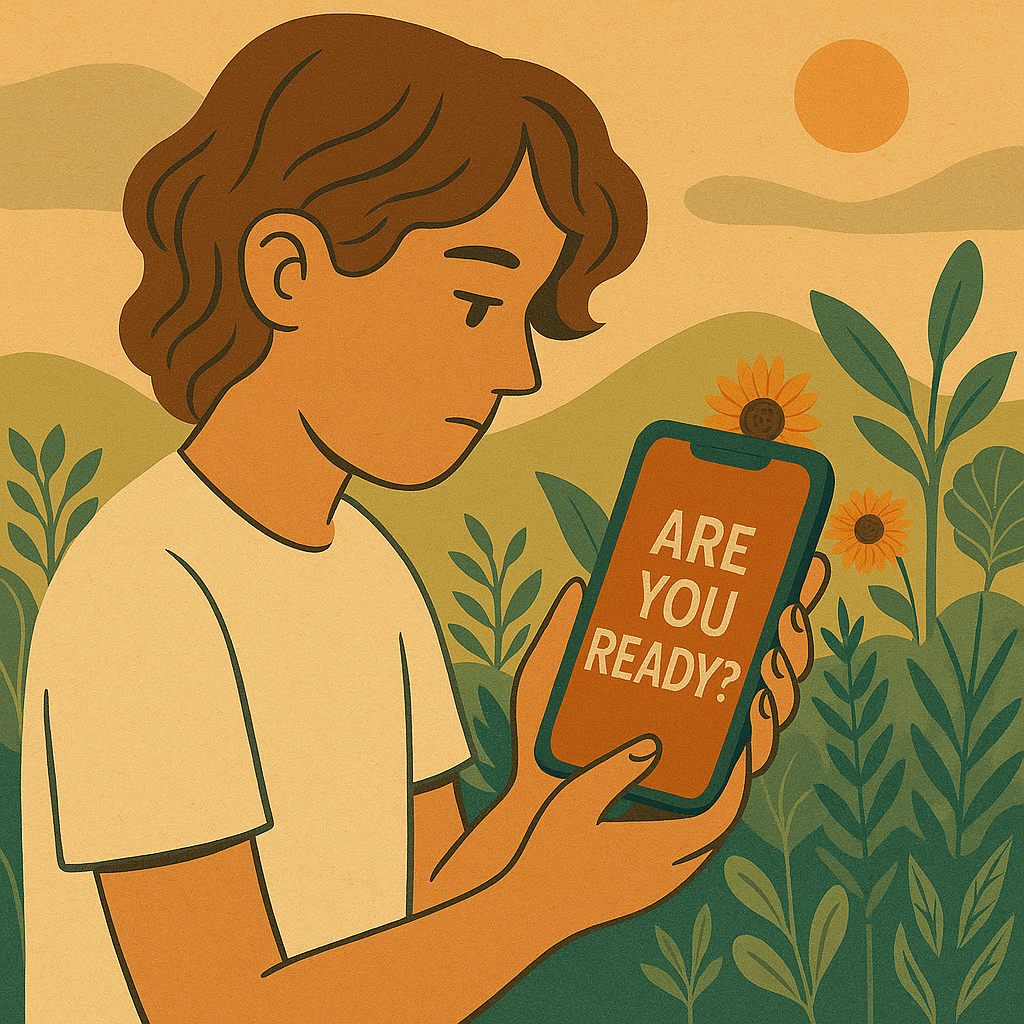
The other night, I was helping out at our kids’ primary school Curriculum and Ethos evening, which focused on screen time. During the Q&A, a parent turned to me and asked the question we all grapple with eventually:
“So… when will you let your kids have a cell phone?”
It’s a conversation my partner and I have had many times. My answer, off the cuff: “Sixteen.” That would, I figured, give us a few years together to help our kids build the tools to navigate this device—and the digital world it opens—before they (at least theoretically) leave home.
But the more I thought about it, the more arbitrary that answer felt.
Age Is Not the Benchmark
Will my 10-year-old son be ready in six years? Will he have the self-regulation to resist the dopamine loop of social apps? The critical thinking to challenge what he reads? The wisdom to walk away when the internet, inevitably, gets weird?
The truth is, age is a blunt tool. We need better benchmarks—clear signs of readiness that reflect where a child is, not just how long they’ve been alive.
Here are a few that seem more helpful:
Digital fluency, not just digital literacy—understanding not just how to use tools, but how they use us.
Impulse control and emotional regulation—noticing boredom, anxiety, or conflict, and responding with reflection rather than escape.
A relationship with the natural world—seeking time outside, off-screen, and offline.
Critical thinking before convenience—turning to one’s own reasoning before turning to a search bar.
A pattern of responsibility—demonstrated care with other privileges: devices, chores, relationships.
If my kids can show me these things, I’ll feel more confident handing them a phone—whatever their age.
What the Research Is Telling Us
Just this month, Linda McGurk published a post about Sweden’s national reversal on screens in childhood. Once seen as a tech-forward society, Sweden went “all-in” on screens:
By 2018, 25% of babies under 12 months used the internet
66% of 9-year-olds had phones
97% of 12- to 15-year-olds were on Snapchat
The results? Not great.
According to the 2022 PISA study, Swedish students recorded their lowest reading and math scores in a decade. Teachers widely reported that phones were harming focus, resilience, and learning stamina.
So, Sweden hit the brakes. The government issued new screen-time guidelines, discouraged device use in early years, and re-emphasized paper, books, and presence.
Their new framework aligns beautifully with what many of us already feel: kids thrive when they can first root themselves in the real world.
What I Wish I’d Said to That Parent
In the moment, I gave the best answer I could. But here’s what I wish I’d said:
My deepest hope is that our kids don’t want a phone.
Not because they’re afraid of it, but because they’re grounded enough to question it.
Because they know what it takes away as well as what it offers.
Because they value real connection, real nature, and real thought—and they’ve had the chance to experience those things first.
Is that naïve? Possibly.
But I’ve seen what happens when we trust children with meaningful choices. I’ve also seen what happens when we hand them devices before they’re ready.
Let’s give them the space, the slowness, and the standards to say, “Not yet.”
And when they do say yes? Let it be from a place of strength.
With gratitude,
Rob
About Rob & The Pathways School
Rob Wilson is an educator, writer, and father of two with over 20 years of experience in international, progressive, and experiential education. From rural Maine to Hong Kong, and now Spain, his journey has always revolved around one question: how can we help young people learn in ways that are meaningful, joyful, and truly prepare them for the future?
Born out of this question, The Pathways School is Rob’s answer. Launching in Southern Spain in 2027, Pathways is a high school that blends personalized, project-based learning with real-world readiness and ecological living. At Pathways, students design their own educational journeys—with the guidance of mentors, experts, and peers—rooted in curiosity, purpose, and deep connection to the world around them.
To follow the journey or get involved, subscribe to the blog or reach out. Let’s build something better—together.